


- Promotion
Why Germany should be your next European adventure
From Berlin’s booming nightlife to fairytale castles – and mile upon mile of beautiful beaches – whatever you’re looking for, you’ll find it in Germany
20/01/2026
Words: Joanna Hunter
Some parts of Germany, we think we know: Munich’s legendary beer gardens, the picture-perfect mediaeval villages of the Black Forest, the heady exuberance of bohemian Berlin. All great places to start, but Germany offers so much more: windswept islands with pristine beaches, stylish spa towns, reinvented industrial hubs and seemingly endless opportunities to explore and have fun. And because of the country’s excellent public transport and road network, close distances make planning multi-city and multi-region trips refreshingly easy – allowing you to stay longer and truly see more. Germany is a country that surprises at every turn, promising endless adventure. Feeling inspired but unsure where to start? Let this guide spark your imagination for your perfect journey.
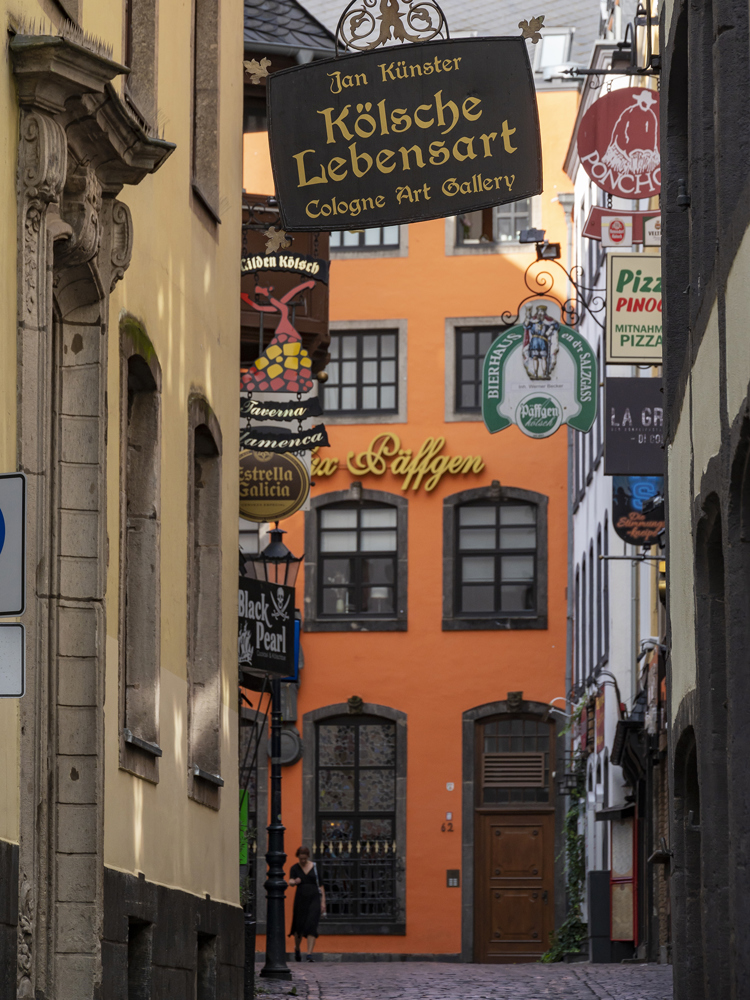
An atmospheric alleyway in Cologne’s Altstadt (GNTB/Udo Bernhart). Opening image: Neuschwanstein Castle at the foothills of the Alps (© GNTB/Christoph Jorda)
The North
They call it the ‘gateway to the world’ but Hamburg is also the perfect introduction to Germany: a modern maritime city with a fascinating past, packed with things to do, from concerts at the landmark Elbphilharmonie, to street markets in St Pauli. There’s plenty on its doorstep, too. Head to the Baltic Coast for wide, sandy beaches, multiple national parks and nature reserves. Don’t miss elegant Heiligendamm, the nation’s oldest beach resort and the first to extol the healing powers of sea bathing.
North Germany is also where you’ll find some of the most beautiful Hanseatic towns: discover Lübeck, where the Hanseatic League, a mediaeval trade association, began, and which is now also known for its marzipan. Along with Stralsund and Wismar, it has earned Unesco World Heritage status thanks to its incredible brick Gothic architecture.
The South
The South is picture-postcard Germany: the land of cuckoo clocks and Black Forest Gateau, of beer gardens and King Ludwig II’s flamboyant castles, from the magnificently turretted Neuschwanstein to the rococo Linderhof Palace. For a more rustic approach, take a drive along the ‘romantic road’, 280 miles worth of mediaeval villages including the half-timbered, pastel-painted beauty that is Rothenburg ob der Tauber.
There are cities too, ranging from historic Heidelberg, home to Germany’s oldest university, to cosmopolitan Munich. If cars are your thing, get to Stuttgart, which is where they were invented. It’s now home to both Porsche and Mercedes Benz museums.
Southern Germany also comes with a generous slide of wellness: Baden Baden exudes old-school spa glamour, while genteel Constance overlooks the beautiful lake, with views of the Swiss Alps.

Hiking on the island of Rügen (© GNTB/TMV/Gross)
The East
Come for the history, come for the nightlife, the architecture, the culture, the hipster vibes – or just the really fantastic food. Whatever you’re looking for in Berlin, you will surely find it. And, thanks to its world-class museums, sporting events and the Berliners’ absolute commitment to a party, you can be sure that, no matter when you go, something exciting will be happening.
Beyond Berlin, eastern Germany is rich in Unesco World Heritage sites, from the opulent Sanssouci Palace to mediaeval Quedlinburg and Wittenberg (where Martin Luther based himself). Classical music fans will be drawn to Leipzig, home to Wagner, Bach and Mendelssohn, literary pilgrims can pay their respects to Goethe, Schiller, Nietzsche and others in Weimar, and admirers of the Baroque should head to Dresden. Another easy trip from Berlin is the island of Rügen on the Baltic Coast. Admire the dramatic white cliffs, take the stream train or simply relax on a beach.
The West
Cathedral aside, Cologne may not be Germany’s most beautiful city, but it is very fun, with large student and gay communities keeping things lively. Come for the ‘crazy days’ of Carnival, in February, and you’ll be rewarded with a six-day street party. It’s also a popular starting point for exploring one of western Germany’s more sedate attractions: the Rhine. Alongside the smaller, twistier, Moselle, the mighty Rhine offers a combination of breathtaking scenery, vineyards and ancient castles.
Also on the river is Düsseldorf, Germany’s fashion capital, known for its cultural scene – and shopping. And don’t miss the Ruhr, formerly Germany’s industrial heartland and now a model of urban regeneration. Highlights include the Red Dot Design Museum in Zollverein, a former mining complex, and the striking Duisburg’s Tiger & Turtle, a walkable sculpture built on a former slag heap.


