The ultimate American adventures
The once-in-a-lifetime trips that show the USA at 250 – from the scale of the Grand Canyon to the waterways of the Deep South and the country’s last true wilderness – can be experienced by sea, sky, rail, road and on foot
Words: Kerry Smith
01/07/2026

The Colorado River winds through the Grand Canyon National Park in Arizona (Getty Images)
The Grand Canyon: beyond the edge
For something a mile deep, 277 miles long and visible from space, Arizona’s Grand Canyon is elusive. It’s possible to pass within a short distance and never see it. There’s no gradual transition. The plateau ends. The canyon begins. The precipice is the seam between incommensurate landscapes. The scale only fully registers from above. From the South Rim, a helicopter lifts out over the edge, and the canyon appears – burning gold and crimson – desert plains and mesas unfolding beneath.
Most visitors arrive, take in the view and leave. But the canyon isn’t a spectacle so much as a working landscape – inhabited, studied, crossed on foot. Trails thread down into it. Climbers move along its walls. Palaeontologists work through layers of rock laid down about two billion years ago. What looks, from the edge, like a vast absence is, at ground level, a place with its own pace and routines.
Phantom Ranch, the only lodge within the canyon itself, is one of the hardest reservations in America to secure: a cluster of century-old stone cabins set along a stream, reached by mule or on foot, nearly a mile down, less a hotel than a foothold in that interior world.
Helicopter flights and guided tours can be included in Audley Travel’s tailor-made itineraries here, including shorter aerial routes and longer trips to the most remote sections, while a sunset safari includes an off-road 4x4 tour through the Kaibab National Forest.

The Globetrotter Lodge on Route 66 in Holbrook, Arizona (Amy Harrity)
Route 66: a century on
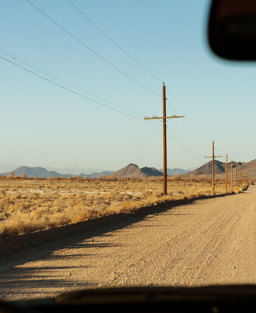
This year, America’s numbered highway system turns 100, as does Route 66, the road that has defined and shaped the country. Running from Chicago, Illinois, to Santa Monica, California, it carried thousands west in search of a different future during the Dust Bowl of the 1930s. Even the number was chosen for how it sounded rather than accuracy – a reminder that this was always as much about myth as infrastructure. When it opened in 1926, much of it wasn’t even paved.
The centenary is a good moment to revisit the places that give the road its character. In Arizona, the Sidewinder – 191 tight turns through the Black Mountains – drops suddenly into the desert. In New Mexico, the Hotel El Rancho in Gallup has been restored. In Oklahoma, the Blue Whale of Catoosa (built in the 1970s by a zoo curator) rises out of a pond just off the road. It became a place where families picnicked, fished, swam and pulled over simply because it made no sense and perfect sense at the same time.
For a slower version of the journey, sections of Bicycle Route 66 follow the original alignment, including the stretch between St Louis, Missouri, and Springfield, Illinois, where parts of the road are now bike trails.
It takes from two to four weeks to drive Route 66 from start to finish. One-way car rentals from Avis (a British Airways Avios partner) include classic muscle cars such as Ford Mustang and Chevrolet Camaro convertibles.

The Tordrillo Mountain Lodge in Alaska provides a seaplane for guest transport. Opening image: hiking the Tordrillo Mountains
Alaska: into the American wild
You don’t come across Tordrillo Mountain Lodge by accident. The nearest road is 60 miles away – “60 miles remote,” as its owner, Mike Overcast, puts it, measuring distance not by geography but by the nearest permanent human infrastructure. From Anchorage, it’s a small plane into a stretch of Alaska that feels less like a destination than an absence of one. Even the aircraft has a history: a 1957 Turbine Otter flies guests into one of the least frequented parts of the US.
Overcast is not a typical hotelier. He studied glaciology, skied for the American team, and built the lodge in 2005 to allow others access to a place he loves. What began as a single cabin has grown into a cluster of buildings that host no more than 20 guests at a time, alongside the scientists and biologists he regularly brings in to study the surrounding terrain.
This isn’t wilderness as a backdrop. Everything here starts with the salmon coming back upriver from the sea. Bears wait at waterfalls to catch them, dragging the fish remains into the forest, where they break down into the soil and feed the plants that grow there.
In June, it’s possible to ski in the morning and fish in the afternoon. Later in the season, helicopters lift off towards glaciers, tundra and remote rivers, where the scale is physical rather than scenic. Further south, in places such as Glacier Bay, the same glacial systems meet the ocean, while routes such as the Alaska Railroad trace a different path through the landscape.

American Mustangs in the McCullough Peaks, Wyoming (Black Tomato)
Yellowstone: where the west endures
Nearly 200 years ago, French-Canadian fur trappers arrived in what is now known as Jackson Hole, chasing their fortune in beaver pelts. Today, the American West still holds, not as nostalgia but as something lived. Familiar from TV series such as Yellowstone, it’s grounded in a reality that’s far less scripted.
In northwest Wyoming’s Yellowstone National Park, established in 1872 as the world’s first national park, days begin at dawn, when the light is low, the roads are still empty and herds of bison and elk move through the same valleys they have always occupied. Later, you navigate the park on the Grand Loop Road, pulling over for sudden shifts in the earth: geysers, including Old Faithful, erupting in bursts of steam, staining the ground in acid yellows and mineral blues.
To the south, in Grand Teton National Park, the mountains rise with abrupt power, a gigantic violence of sheer rock without the softening cushions of foothills, while the Snake River slows everything down. You drift in silence, watching the banks: elk at the tree line, birds lifting off the surface, the occasional bear cutting across the shallows. On land, walking through sagebrush flats or riding in the valleys, the scale is harder to grasp. It’s the river that brings the landscape into focus.
Looking across to the Tetons, Hotel Yellowstone at Jackson Hole is a great base for early starts and long days. For serious hikers, the Thorofare Ranger Station is deep in one of Yellowstone’s most remote areas, around 32 miles from the nearest trailhead, where old stories still live among the pine trees.
A six-night Yellowstone and Grand Teton journey from Black Tomato inspired by the Yellowstone TV show combines a private ranch camp with wildlife tracking, rafting on the Snake River, riding with local wranglers and a stay at Hotel Jackson.

The Formula 1 Miami Grand Prix is held in the Miami International Autodrome at Hard Rock Stadium
The Grand Prix: racing hearts in Miami
The fast and the curious arrive in Miami, Florida, for a different kind of American journey – one built around spectacle rather than landscape. The Grand Prix is Miami’s answer to Monaco – less bound by tradition and more focused on scale, energy and the business of being seen. Formula 1 may be rooted in Europe’s rituals, from Monza and Silverstone, but in Miami it’s been reshaped through an American lens. It’s bigger, louder and more expansive, already influencing what the sport becomes next.
The race itself matters, of course, but so does everything around it, with a celebrity-heavy crowd, a weekend that runs on parties and a setting that’s entirely Miami. This is an event experienced in fragments, from grandstands, terraces and trackside platforms. Team principals, sponsors, celebrities and fans move through the same spaces, orbiting the track.
MSC Cruises’ five-deck structure, the MSC Yacht Club, overlooks turns five to nine, where the race can be won or lost as the cars brake, turn and accelerate. There are cabanas at ground level, close to the track. On the floor above, a pool and an open deck carry the noise across the water. Higher still, French-born New York Bagatelle runs a full restaurant service beneath bars and terraces with sightlines of Miami across the circuit and the stadium beyond. The MSC Yacht Club will dock again for the 2027 Miami Grand Prix.

Bald cypress trees draped in Spanish moss in the Louisiana Bayou
Beauty in the bayou: the rhythm of the rivers
In southern Louisiana, the land gives way to water. Roads narrow, then disappear, replaced by a shifting web of rivers, bayous, swamps and marshes where the horizon blurs into heat and haze.
The only way in is by a flat-bottomed airboat. The engine roars to life, the propeller spinning into a blur, and it suddenly skims across water so shallow it barely seems there, pushing through reeds and duckweed, sending birds scattering. Alligators lie half-submerged in brackish marshes, their eyes watching just above the surface. Turtles slip from sun-warmed logs.
Further into the bayous, the scale changes. These backwaters feed into the Intracoastal Waterway, a 3,000-mile inland route stretching along America’s southern edge. In places such as the Atchafalaya Basin, life still moves to the rhythm of the river – fishermen casting at dawn, gator hunters navigating hidden channels and families who have worked these waters for generations. Lunch is at a small Cajun fishing lodge, where the catch from that morning is cooked on the spot. At the edge of it all sits New Orleans – louder, brighter and still shaped by the same water.